
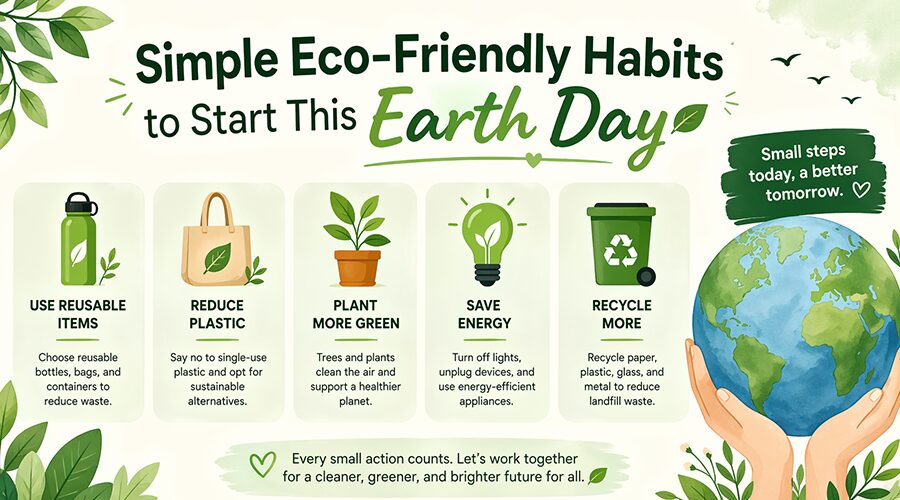
Simple Eco-Friendly Habits to Start This Earth Day
Earth Day is more than just a date on the calendar—it is a reminder that every small action we take can create a lasting impact on our planet. By adopting simple eco-friendly habits, we can reduce waste, conserve natural resources, and create a healthier environment for future generations. Sustainability does not require dramatic lifestyle changes; instead, it begins with small, practical steps that fit naturally into our daily routines.
This Earth Day, we have the opportunity to transform our habits into meaningful contributions for the planet. From reducing plastic use to conserving energy and supporting sustainable shopping, every decision matters. Let us explore the most effective and easy-to-follow eco-friendly habits that can make a real difference.
Why Simple Eco-Friendly Habits Matter
Sustainability starts with awareness and grows through action. When we embrace eco-friendly habits, we contribute to reducing pollution, lowering carbon emissions, and preserving biodiversity. The beauty of these habits lies in their simplicity—small changes repeated consistently create powerful long-term results.
Many people believe that protecting the environment requires expensive solutions, but in reality, it often saves money. Using less water, reducing electricity bills, and minimizing unnecessary purchases are both environmentally and financially beneficial.
Earth Day reminds us that sustainability is not a one-day event; it is a lifelong commitment that starts with simple daily choices.
Reduce Single-Use Plastic Consumption
One of the easiest eco-friendly habits to adopt is reducing our dependence on single-use plastics. Plastic bags, disposable bottles, straws, and packaging contribute significantly to environmental pollution and ocean waste.
We can start by carrying reusable shopping bags, stainless steel water bottles, and reusable coffee cups. Replacing disposable cutlery with washable alternatives also helps reduce landfill waste.
Choosing products with minimal packaging and supporting brands that use biodegradable materials can further reduce plastic pollution. These simple swaps significantly decrease our environmental footprint.
Switch to Reusable Household Products
Reusable household products are practical, cost-effective, and environmentally responsible. Instead of paper towels, we can use washable cloth towels. Instead of plastic wrap, beeswax wraps or reusable containers are better alternatives.
Refillable cleaning products and glass storage jars help eliminate unnecessary waste. Cloth napkins, reusable kitchen sponges, and sustainable dish brushes also make a noticeable difference over time.
By replacing disposable products with durable alternatives, we reduce waste and create a more sustainable home environment.
Conserve Water Every Day
Water conservation is one of the most impactful eco-friendly habits we can practice. Freshwater resources are limited, and simple actions can prevent unnecessary waste.
Turning off the tap while brushing teeth, fixing leaking faucets, and taking shorter showers are effective ways to save water. Installing water-efficient fixtures and using buckets instead of hoses for cleaning can also make a major difference.
We should also consider watering plants during early mornings or late evenings to reduce evaporation. Responsible water use supports both the environment and long-term sustainability.
Save Energy at Home
Reducing energy consumption helps lower electricity bills and decreases greenhouse gas emissions. Energy-saving habits are simple yet highly effective.
We can begin by switching off lights, fans, and appliances when not in use. Using LED bulbs instead of traditional bulbs reduces electricity usage and lasts much longer.
Unplugging chargers and electronics when they are not needed prevents unnecessary energy drain. Choosing energy-efficient appliances and maximizing natural sunlight during the day also support greener living.
Even small actions like air-drying clothes instead of using dryers contribute to significant long-term energy savings.
Choose Sustainable Transportation Options
Transportation contributes heavily to carbon emissions. Making smarter travel choices is a strong step toward sustainability.
Walking or cycling for short distances not only reduces pollution but also improves personal health. Carpooling and using public transportation reduce fuel consumption and traffic congestion.
For those considering a long-term change, electric or hybrid vehicles offer environmentally friendly alternatives. Planning errands efficiently to reduce unnecessary trips is another simple but effective eco-friendly habit.
Earth Day is the perfect time to rethink how we move and travel every day.
Support Local and Sustainable Products
Buying local products helps reduce transportation emissions and supports nearby communities. Fresh produce from local markets often requires less packaging and fewer preservatives.
Choosing organic and ethically sourced products also encourages sustainable farming and responsible business practices. Supporting eco-conscious brands sends a strong message that consumers value sustainability.
We should prioritize quality over quantity, purchasing durable items instead of frequently replacing cheaper products. Sustainable shopping is not about spending more—it is about buying smarter.
Start Composting Kitchen Waste
Food waste is a major environmental issue, but composting offers an easy solution. Fruit peels, vegetable scraps, coffee grounds, and eggshells can be turned into nutrient-rich compost for plants and gardens.
Composting reduces landfill waste and decreases methane emissions caused by decomposing organic matter. Even apartment residents can use compact compost bins designed for small spaces.
This simple Earth Day habit turns waste into something valuable and supports healthier soil for future growth.
Plant More Greenery Around You
Planting trees, flowers, herbs, and indoor plants contributes directly to environmental improvement. Plants absorb carbon dioxide, improve air quality, and create healthier living spaces.
Even small balcony gardens or indoor plants make a positive difference. Growing herbs like basil, mint, and coriander at home reduces packaging waste and promotes fresh, sustainable living.
Participating in community tree-planting initiatives on Earth Day is another excellent way to create visible environmental impact.
Green spaces improve both the planet and our well-being.
Practice Mindful Food Consumption
Food choices have a strong connection to environmental sustainability. Reducing food waste and making conscious meal decisions can significantly lower our carbon footprint.
Planning meals in advance helps prevent overbuying and unnecessary waste. Storing food properly extends freshness and reduces spoilage.
Including more plant-based meals in our weekly routine can reduce environmental pressure caused by large-scale meat production. Even a few meat-free days each week support sustainability efforts.
Mindful eating is one of the most powerful eco-friendly habits we can adopt.
Recycle the Right Way
Recycling is effective only when done correctly. Understanding local recycling rules ensures that waste is processed properly instead of ending up in landfills.
Separating paper, plastic, glass, and metal helps streamline recycling systems. Cleaning containers before recycling prevents contamination.
We should also responsibly dispose of electronics, batteries, and hazardous waste through designated collection centers rather than regular trash bins.
Proper recycling transforms waste management from a habit into a meaningful environmental action.
Spread Awareness and Inspire Others
Sustainability grows stronger when shared. Encouraging family members, friends, and coworkers to adopt eco-friendly habits multiplies positive impact.
Social media can be used to promote Earth Day awareness, sustainable living tips, and community clean-up initiatives. Schools and workplaces can organize recycling drives, tree planting campaigns, and environmental education programs.
Leading by example is often the most effective form of inspiration. When others see practical eco-friendly habits in action, they are more likely to adopt them themselves.
Earth Day becomes more powerful when communities participate together.
Create a Long-Term Earth Day Lifestyle
The true spirit of Earth Day lies in consistency. One-day efforts are valuable, but lasting environmental change comes from long-term habits.
We should create realistic sustainability goals such as reducing monthly plastic use, lowering electricity bills, or starting a home garden. Tracking progress helps maintain motivation and accountability.
Eco-friendly living should feel natural, not overwhelming. By focusing on small, manageable actions, we build habits that last for years rather than days.
Earth Day is the starting point—not the finish line.
Final Thoughts on Starting Eco-Friendly Habits This Earth Day
Simple eco-friendly habits have the power to create extraordinary environmental change. From reducing plastic waste and conserving water to planting greenery and supporting sustainable products, every action contributes to a healthier planet.
This Earth Day, we do not need perfection—we need consistency. Sustainable living begins with awareness, grows through action, and becomes meaningful through commitment.
By choosing better habits today, we create a cleaner, greener, and more responsible tomorrow. Earth Day is our reminder that protecting the planet starts with us, one simple habit at a time.